Find out if stammering (also known as stuttering) is classed as a disability. Plus, read about the differing views of people who do and don't see themselves as disabled.
Some people feel strongly that stammering is a disability. They find their stammer is profoundly disabling.
For others, however much they stammer, it may not be a disabling issue for them. Or they may not wish to be defined as having a disability.
What does the law say?
But stammering can be classed as a disability under UK law.
This is because of the Equality Act 2010 and the Disability Discrimination Act 1995 (N. Ireland). These are pieces of UK law that prevent discrimination on grounds of disability.
These Acts define a disability as a difference that has "a substantial, adverse and long-term negative effect on your ability to carry out normal day-to-day activities".
Having a stammer can meet that criteria, depending on how much the person stammers. So, you're covered if stammering substantially adversely affects your ability to carry out day-to-day activities.
You do not need to be registered as disabled. And you're covered even if you don't see your stammer as a disability. 'Disability' here is a legal concept. It is a matter of whether you fulfil a particular legal definition.
What that means for you
Under UK law, the Acts can:
- protect you from disability discrimination
- allow you to get 'reasonable adjustments' to make things easier. For instance at work, in interviews, at school or university
- in some circumstances allow you to claim disability benefits.
We talk about these in more detail below.
Protection from discrimination
You are legally protected from unfair treatment that is based on your stammer.
If you feel you have been discriminated against, either at work, at school, in shops or restaurants, or when using a service, STAMMA can help. Contact our Advocacy Service as soon as possible and we could help you to challenge it.
Getting 'reasonable adjustments'
Tasks at work, university or school aren't always designed for people who stammer. As a result, they can put you at a disadvantage.
But the Equality Act and Disability Discrimination Act can help you here.
If you find speaking situations difficult you can ask your workplace, university or school to make 'reasonable adjustments'. Speak with them about things they can change to make it easier for you. For example:
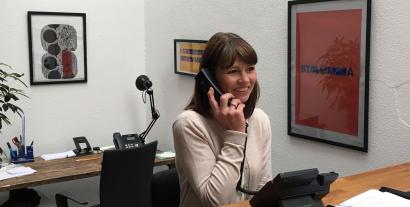
- Going into a separate room to make phone calls.
- Extra time for presentations, interviews or oral exams.
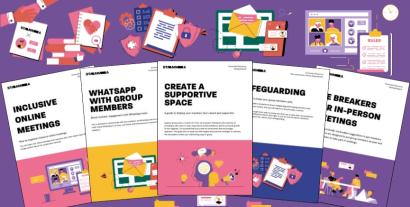
For lots more ideas, as well as how to ask for reasonable adjustments, see Stammering At Work, Job Interviews, University and School. You can also download our guides below.
Disability benefits & stammering
In certain situations, people who stammer might be entitled to disability benefits. The Personal Independence Payment (PIP) is a disability benefit paid to people aged 16-64.
It depends on the individual's specific circumstances and is points-based. It involves having a face-to-face assessment with a health professional to see what level of assistance people need.
Read Gov.uk's page on Benefits & financial support if you're disabled or have a health condition.
More information on the law & stammering
See Stammering & The Law for more detail about the legal position.
Also, download our 'Stammering, Discrimination & the Law' guide below. It uses lots of legal language so it's very dry, unfortunately. But start a webchat or call our helpline if you have any questions.
Disability or difference?
This is a question that has sparked a bigger debate in the community. Is stammering a disability or a medical condition which needs 'managing'? Or, is it a difference we need to learn to accept?
Medical v Social Model
Disability has traditionally been seen as something that people need to manage or 'fix'. People call this view the 'Medical Model of Disability'.
Indeed, for many people who stammer, feelings of shame can make them aim for fluency. In a world where stammering is not accepted, this is understandable.
The 'Social Model of Disability' is a newer concept. It says that people are not disabled by their medical condition. Rather, it is the attitudes and structures of society that disable people.
This model argues that these attitudes leave people with disabilities feeling excluded. That they restrict people from participating fully in society and living their lives. Read more on our What Is Stammering Pride? page.
What does STAMMA believe?
We believe it shouldn't be a binary choice. We believe that people should be able to be accepted and respected as they are. But this shouldn't stop people from finding support and presenting themselves to the world in a way which is comfortable for them.
We live in a society where we expect peoples' differences to be accepted.
We expect there to be support, reasonable adjustments for people with disabilities to be able to function. And to be accepted for who and how they are. Whether visually impaired or in a wheelchair. A stammer is no different.
Many people find that controlling a stammer can get in the way of expressing themselves. And that it can be an intolerable and unacceptable strain.
There is no reason why anyone should feel pressure to talk 'fluently'. And indeed for some it is utterly impossible. Expecting someone to mask their difference is no longer acceptable in today's society. So don't accept pressure to talk smoothly.
You should also expect organisations to be flexible and respectful of your needs. So, ask for reasonable adjustments (mentioned above) if you want them.
And don't accept bullying, ridicule or exclusion.
More information
- Visit stammeringlaw.org.uk for a wealth of information on stammering and UK disability discrimination law.
- Equality Advisory and Support Service: Provides information, advice and support on discrimination issues. It replaces the Equality and Human Rights Commission helpline.
- The Disability Law Service: May be able to provide free legal advice to disabled people and representation where appropriate.
- Citizens Advice: They can help you negotiate with an employer and may in some cases be able to represent you at a hearing.
What next?
- Become A STAMMA Member for free and join the community. We'll keep you updated with our activities.
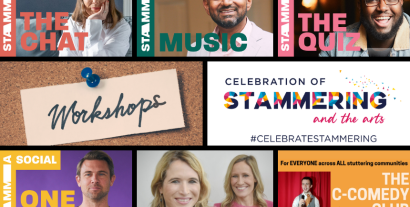
- Get involved with the STAMMA community. Find an event, fundraise, share your story, volunteer, take part in research and more.
What did you think of this page? Give us your feedback, we'd love to hear from you.