You're not alone if your child is stammering (also known as stuttering). This page will help you feel less worried and know what to do next.
Is your child doing any of these things?:
- Repeating sounds or words, eg "M-m-m-mummy".
- Stretching sounds, eg "Can you rrrrread me a ssssssstory?"
- Having a silent block where a sound gets stuck. This might be accompanied by tension in the mouth, face or body. Or jerking the head or stamping their feet.
If so, it's quite common.
Many children go through a phase of stammering. It quite often starts between the ages of 2 and 5, but sometimes it can start later.
It can vary from day to day, so you might find your child stammers a lot one day and then not so much the next.
It's important to remember that nothing you have done has caused it, so don't blame yourself.
It's understandable if you're feeling worried. It can be scary. In the video below, Kirsten from STAMMA answers the question "Should I be worried that my pre-school child is stammering?"
Will it stop?
Children might stammer for a period of days, weeks or months. Most children will stop stammering over time, and some will continue to stammer.
At the moment, we can't tell for sure which children will stop and which won't.
But try not to be worried about this. If stammering does continue, that's OK. Lots of people who stammer live happy and successful lives. And it's OK to stammer.
Find out more on our page What Is Stammering?
Why Is my child stammering?
Lots of children go through a period of stammering while their speech and language are developing.
We don't know exactly why some children stammer. Research suggests it's a combination of things, including:
- A slight difference in the wiring of the brain
- Genetics. Stammering often runs in families, but not in all cases.
It isn't caused by poor parenting, anxiety, speaking more than one language or anything you, or anybody else, have done.
Find out more on our page What Causes Stammering?
As a mother, a million thoughts ran through my head... I had many feelings too, including frustration, guilt and helplessness. I just didn't know how best to help him and had many questions.
Victoria, parent
What should I do?
Supporting your child at home
How you respond to your child is important. It will shape how they see themselves and how much they enjoy talking.
It's OK to feel worried. But try to stay calm and neutral around them even if that's not how you're feeling. Try not to react or look away when they stammer.
If we give our child the message that the way they talk is scary or 'bad', they might start to feel worried too. They might think that it is better to be silent than stammer. They might begin to try hiding their stammer. And that tends not to be helpful at all.
Give them time and space to finish, and focus on what your child is saying rather than how they speak.
Avoid interrupting them and finishing their sentences. Try not to tell them to "slow down" or "relax" either. These might make a child self-conscious.
Also, try not to praise them only when they are fluent.
You don't have to get everything right. Being warm, patient and listening to your child is far more important than saying exactly the right thing.
Read Talking With A Child Who Stammers for lots more easy things you can do at home that can make a huge difference.
In the video below, Kirsten talks more about how to support your child at home.
Chat about it with us
We're here to listen. Hit the button below for details of our free helpline and webchat.
If you're still worried, speech & language therapy may be helpful. After chatting with you and your child, a therapist can make an assessment and answer any questions you might have.
If your child is a bit older, they could go on a stammering group course.
Hit the button below to see what help is available, and how we can help you find a therapist.
Meet other parents who understand
Our Parent support groups
Our online 'Parent 2 Parent' groups are a great way to connect with other parents to share experiences and tips, and get support and reassurance.
I was really nervous, but STAMMA's online group was such a huge turning point for me, and I came away with strategies to help Jasmine.
Heather, parent
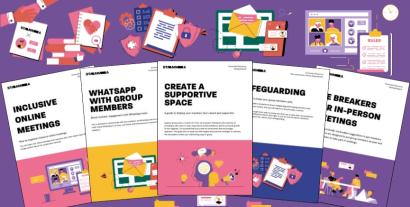
Read and share our information leaflets with your family, friends, nursery and school.
More videos
Want to watch more? Our Videos For Parents page has lots of videos including:
- Has your pre-school child started stammering?
- Is it my fault that my child is stammering?
- Becoming more comfortable with your child's stammering
Other resources
- Watch videos by Humber Teaching NHS Foundation Trust: 'My Stammering Tap' and 'My Stammering Child'. They explore any concerns you might have.
- Read articles from other parents.
- See a list of books for parents & children.
- How to nurture resilience in children who stammer.
More support
- UK Support Group for Parents of Children who Stammer Facebook group.
- Our own Facebook group. Open to anyone, including parents.
- Action for Stammering Children: an informative website with a focus on children and young people.
Join the community
Become a STAMMA member for free or sign up to our mailings. You'll get to:
- hear about our Family Day and other events for parents
- get discounts at our events
- help support other parents and change public attitudes.
Has this page helped? We'd love to hear your feedback.
Creating it was only possible thanks to your kind donations. Please consider donating to STAMMA.