Book review: Hello? Still there?
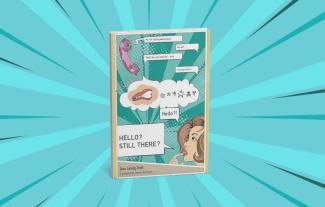
Bill McMillan from our volunteer review team shares his thoughts on Hello? Still there?: A personal book about stammering by Tove Selvåg Drott (translated by Jessica Karlsson).
When Tove Selvåg Drott was pulled up on the way she spoke by a forthright adult, she was astonished, and concluded that few people actually knew what stammering is, with some feeling uncomfortable around those who stammer.
In Hello? Still There?, the Swedish author and teacher sets out to put that right by sharing her story and experiences to raise awareness and give tips for those who don't stammer, as well as those who do.
Rather than being a straightforward autobiography (fascinating as it is), Tove inserts vignettes and voices from those around her to tell her story, which opens up a whole range of other experiences, all really interesting and helpful.
We hear from her parents, who explain the approach they took towards Tove's stammer when she was little. They appear to have been exceptionally understanding and helpful, and maybe because of this, Tove realised that she always wanted to speak out. One instance of this was when she was going to phone a friend and her mother offered to do it for her, knowing that it would be difficult. Tove declined and made the call herself, as well as all the calls thereafter, which was very good for her growth. We also hear from Tove's sister, who tells readers what it's like to have a sibling who stammers.
I wish a book as clearly written and helpful as this was around when I was young.
Tove doesn't make the book all about herself, though, and brings in professionals and other people who stammer to give a wider picture of the stammering experience. A speech & language therapist (SLT) gives a fascinating insight into what therapy involves and talks us through what she would offer when working with someone. Her descriptions of the various modern methods were very interesting to me, as I went to several therapists in my younger years who were no help at all. For example, I do not recall anyone offering me a choice in therapy.
Challenges
Tove shares the speech challenges she has faced throughout her life and in the present day, and each chapter addresses situations like school, work and relationships. It all gives a good overview of stammering and each chapter really does explore the subject very well.
I could relate to every aspect she describes, particularly the part where she says that she finds it challenging to speak with certain people. Although I'm not nervous or scared, I sometimes find it hard to talk to certain people for no apparent reason, whilst being communicative to others. I don't know why this should be, as it's nothing to do with position, accent, origin, etc. It may be a sixth sense of impatience I get from them.
Tove realised early on that she wanted to be a teacher and worked hard to get there. She clearly had the strengths to get what she wanted from an early stage — no doubt thanks to the support she had from her family — but she never forgets others who might find it more challenging to do what she has done. To highlight how the experience of stammering can be different for everyone, Tove brings in voices from others who stammer, each sharing their own individual challenges. There's plenty of self-help advice and tips from them, which would certainly be helpful for young adult readers especially.
I especially liked Tove's honesty. She makes no claims to be superhuman. She is totally honest about reverting to covert stammering on challenging days and shares her tricks for coping, one of which is pinching her leg, which might not be advised by an SLT. Some of these tricks I have already tried, although I've never pinched myself (yet)!
Tove also gives tips and advice for parents, teachers and friends. My only gripe with the book is that these are mentioned in a chapter titled 'Advice for reducing stammering'. Maybe this was lost in the translation, but a more helpful title would have been something like 'Advice for reducing the impact of stammering', which would involve less judgement. There are also a few instances where Tove mentions her stammering 'getting worse', which some readers might object to.
These things aside, this is a very good book, not just for those who stammer, but for SLTs, teachers, friends and families too. It's readable, enjoyable and well-structured. I wish a book as clearly written and helpful as this was around when I was young. Then I wouldn't have had the never-ending "you'll grow out of it" advice, which was given in these grim days.
Hello? Still there?: A personal book about stammering, by Tove Selvåg Drott, is published by Prata utan gränser and is available now on all formats on Amazon.
Thank you to Bill for reviewing this book for STAMMA.
Related Links


Become a member
It's free
Join the movement to change how people understand and react to stammering.
Campaign. Fundraise. Connect. Meet. Vote. Talk.