Stepping Back Into The Spotlight Thanks To Traitors' Jessie
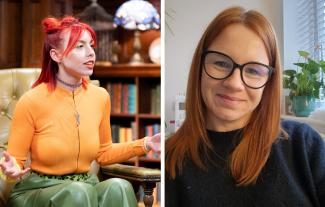
Hayley Rawlings tells us how seeing Jessie on the hit BBC show The Traitors lit a spark that lay dormant, encouraging her to take part in TV and radio interviews about stammering.
Throughout my twenties, I felt confident in my stammer. I spoke openly about it and actively raised awareness wherever I could. I was interviewed by local newspapers, went on the radio, and helped to run support groups for people who stammer.
As I ventured into my thirties, life became busy in ways I hadn't expected. The pandemic removed many of the testing situations I'd come to realise were actually helpful for my relationship with my stammer. The support group I arranged closed, and even when the world began to reopen, it was difficult to get people to come back together again. I made the decision to step back and focus on my studies alongside working full time. Survival mode took over, and my stammer quietly slipped into the background.
Seeing another woman around my age on a mainstream TV show, openly stammering and owning it, felt huge.
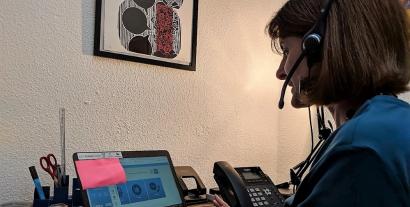
Last summer, things shifted. I was promoted at work and became a Team Leader. Suddenly, I was responsible for running a team, managing staff, and overseeing a service. My stammer caused doubts in me before I even applied for the role, but despite getting the job, I found the first month or so incredibly difficult. I struggled more than I expected and started experiencing what I now recognise as imposter syndrome. I questioned whether I truly belonged in the role and felt as if my stammer was becoming more of a battle.
Then along came jessie...
The first place I turned was STAMMA's online Facebook group. Reading other peoples' experiences and asking for advice reminded me that I wasn't alone. I also attended the Women Who Stammer online support group, which gave me a much-needed boost.
Then Jessie came along. Seeing another woman around my age on a mainstream TV show (The Traitors), openly stammering and owning it, felt huge. It reignited something in me that I hadn't realised had faded. I couldn't help thinking about the people watching at home who stammer, especially those who may never have seen themselves represented on screen before. I remembered how much Gareth Gates meant to me as a teenager, and I could see Jessie having that same impact for a new generation. She was well-liked on the show, and the way the cast embraced her stammer was incredibly affirming. Watching her reminded me of how I used to live my life: unapologetically myself.
So, when the BBC got in touch asking for people to talk to them about stammering and the impact of having someone with a stammer on mainstream television, I jumped at the chance.
It started with a Teams meeting with a journalist called Lola, who asked me questions about my experiences and about Jessie on The Traitors. She was patient, gave me time to talk, and didn't rush me. She explained that my story would need to go to a panel to decide whether it would be taken forward. Before we ended the call, Lola asked if, should it progress, I'd be willing to go on TV and radio. She must have caught me on a good day, because I said yes.
Being interviewed
The very next day, Lola contacted me with the good (but scary) news that my story had been picked. She asked if she could come over to film me at home for a piece on BBC Wales Today. Lola was amazing. She was warm, kind, and genuinely interested in stammering. Interestingly, my fear wasn't really about stammering itself, it was about not stammering and people thinking I was a fake. That fear surprised me, but it reminded me how complicated our relationships with our stammers can be.
Friends from school, who I hadn't spoken to in years, reached out to say how amazing it was to see me talking about my stammer again.
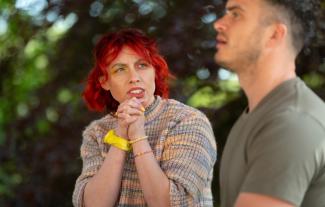
When Lola and the camera operator arrived, I felt strangely confident. I've always found that when I'm talking about stammering, I worry less about it. They asked what they could film for the 'in-between' shots, and suggested my partner, Jon, sit on the sofa and pretend to watch The Traitors with me. I was very surprised when he agreed and was very grateful. It all felt a bit staged and awkward at first, but it was part of the experience. Even my dog, Roxy, made the final cut.
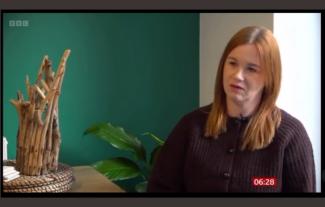
Lola said I'd also be contacted by BBC Radio Wales to discuss appearing on their breakfast show. I'd been on the radio before, but only pre-recorded. This time, because I'd be speaking alongside Kirsten from STAMMA, it would have to be live. This was by far the most terrifying part.
When BBC Radio Wales got in touch, they gave me a few questions that they would ask beforehand and told me to expect a call at 8:15am. The phone call didn't come until 8:40, and those 25 minutes felt like the longest of my life. When the call finally came through, I could hear the live show as I waited to speak. My biggest fear was that they'd hang up if they thought the line had dropped, when in reality, it might just be me trying to get a word out. Thankfully, that didn't happen.
After a few seconds on air, I felt surprisingly confident. I spoke about the positive feedback that Jessie was receiving from people online and that her stammer was rarely mentioned.
The feedback afterwards was incredible. Friends from school, who I hadn't spoken to in years, reached out to say how amazing it was to see me talking about my stammer again. My workplace shared the piece with the wider team, which completely eased my worries about people not knowing I stammer. Since then, I've felt more confident in general, and I hope it's opened the door for people to ask questions and learn more.
Going on the radio and TV didn't fix everything — but it reminded me that people want to hear my voice. In the words of Jessie, "If I talk, it's because it's important".
Read more Your Voice articles.
Would you like to write an article? See Submit Something For The Site or email editor@stamma.org for details.
Related Links
Become a member
It's free
Join the movement to change how people understand and react to stammering.
Campaign. Fundraise. Connect. Meet. Vote. Talk.